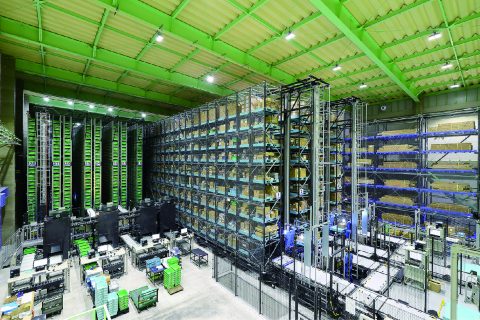


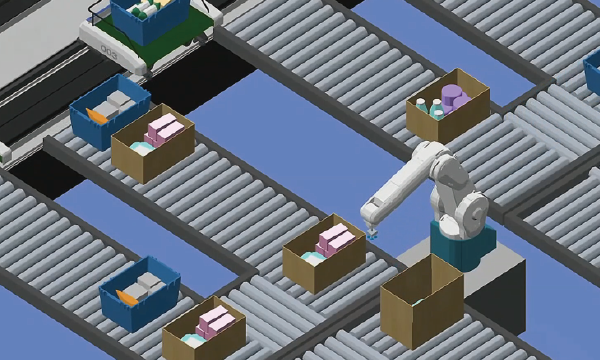
In logistics and manufacturing environments, there is a task known as picking, in which products (pieces) are taken out of containers (buckets).
To automate this process, it is necessary to accurately identify where the target objects for picking are located based on images captured by cameras.
However, several challenges existed: the shapes and types of buckets and pieces are highly diverse, making rule-based processing alone insufficient, and when pieces overlap, their boundaries become difficult to distinguish.
To address these issues, we applied image processing technology using AI (deep learning).
The core of this technology is a piece extraction algorithm. Using AI, the system analyzes images and determines which parts correspond to the bucket and which represent the contours of individual pieces.
Overall Processing Flow
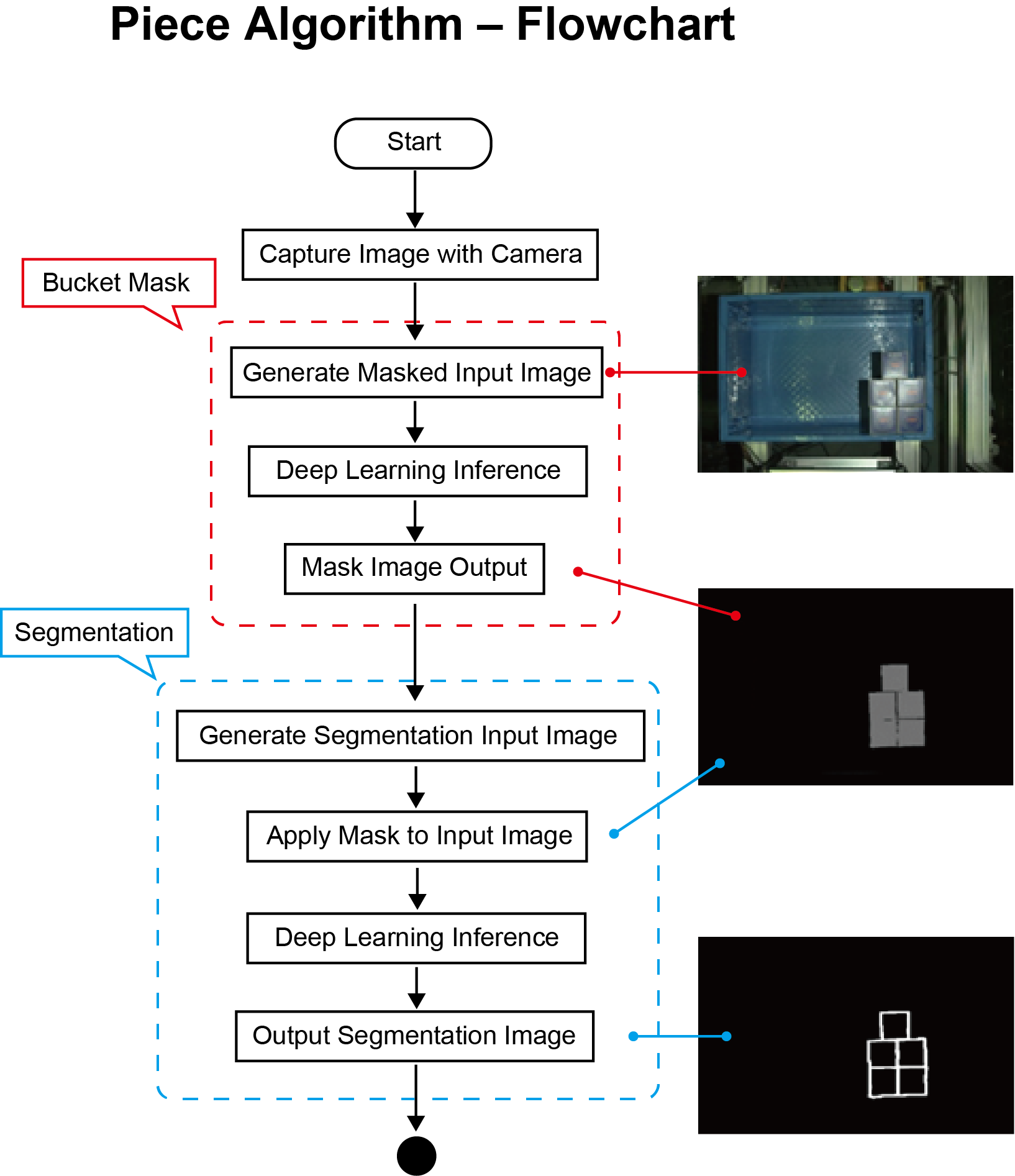
With the bucket mask, the AI is trained to extract only the piece regions from images containing both buckets and pieces.
Meanwhile, in segmentation, the AI is trained to extract only the contours of pieces from images of the pieces themselves.
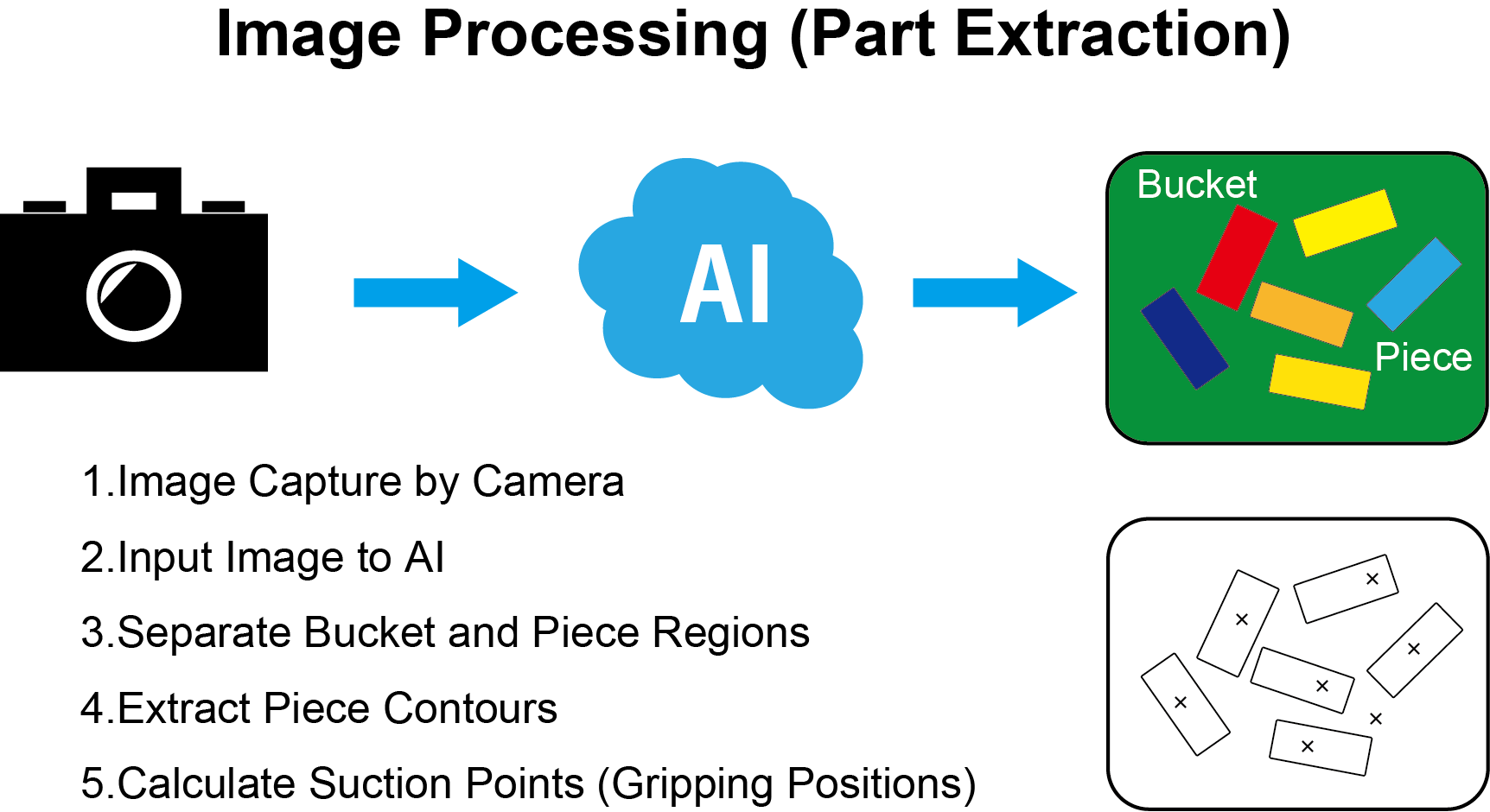
This technology enables model-less recognition without requiring prior registration of piece types, allowing it to handle a wide variety of pieces.
In addition, combining AI-based recognition with rule-based processing improves overall accuracy.
As a result, this technology makes it possible to automate picking operations in environments that handle many different product types, such as automated warehouse picking and parts sorting in factories.